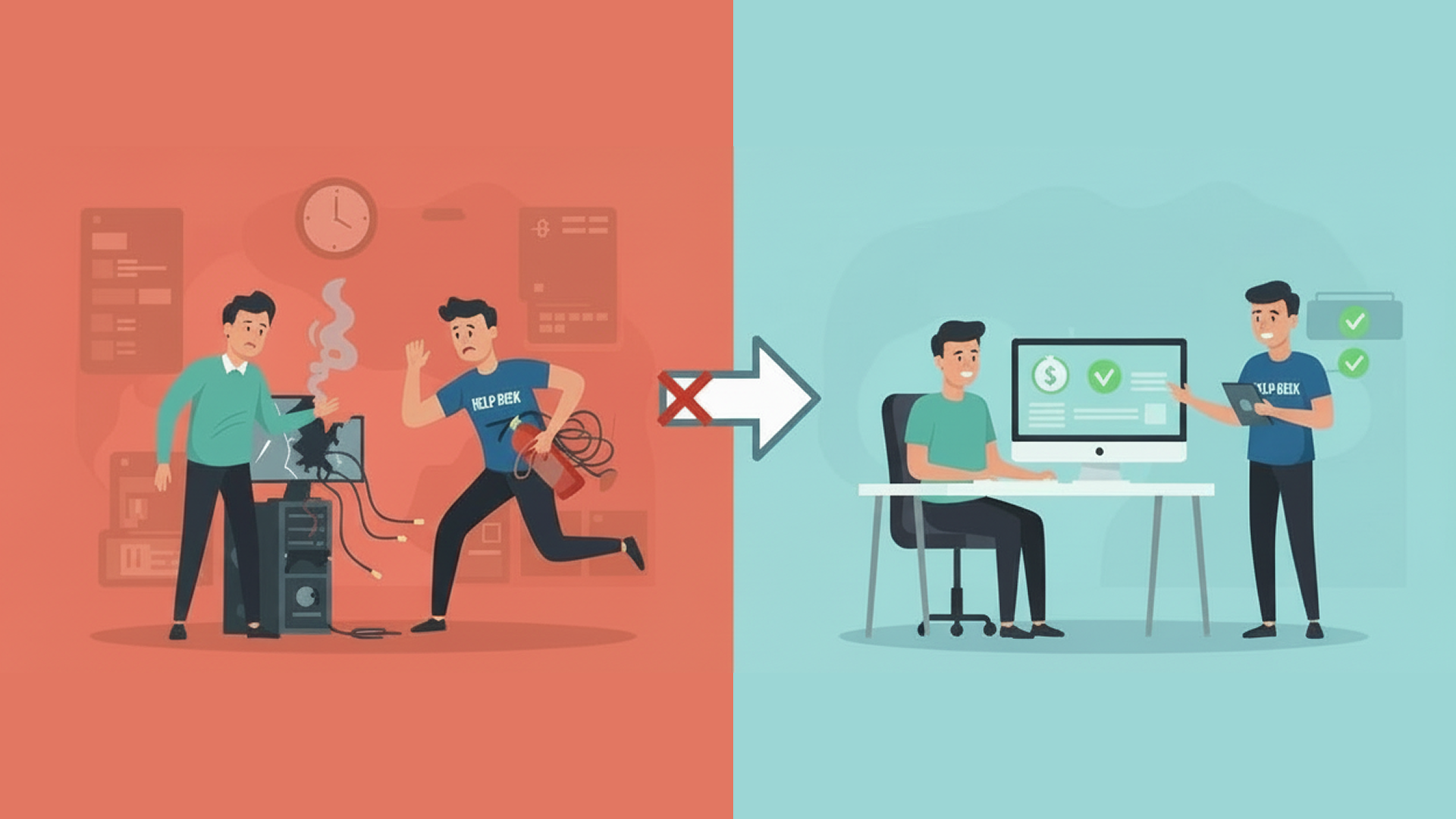
Reactive vs Proactive support
In the world of customer service, the difference between “good” and “great” often comes down to timing. Most businesses operate on a Reactive model—waiting for a fire to start before reaching for the extinguisher. However, the industry is shifting toward a Proactive approach—installing a sprinkler system before a spark even flies.
Here is a breakdown of how these two philosophies compare and why the balance between them is the “secret sauce” for customer retention.
1. Reactive Support: The “Firefighter” Approach
Reactive support is the traditional model: a customer has a problem, they contact you, and you fix it. It is fundamentally driven by the customer’s initiative.
- How it looks: Help desk tickets, incoming phone calls, and “Contact Us” forms.
- The Goal: To resolve a known issue as quickly and efficiently as possible.
- The Downside: By the time a customer reaches out, they are already frustrated. If your wait times are long, that frustration compounds, leading to higher churn.
2. Proactive Support: The “Mind Reader” Approach
Proactive support involves identifying and resolving issues before the customer even realizes they have one. It’s about taking the first step.
The Benefit: It builds immense trust. When a brand says, “We noticed this might be tricky, so here’s a tip,” the customer feels valued rather than ignored.
How it looks: Sending an email about scheduled maintenance, providing an automated “How-to” guide after a purchase, or a pop-up on a checkout page that solves a common error.
The Goal: To eliminate friction and reduce the number of incoming tickets.
The Golden Ratio: Why You Need Both
You can’t be 100% proactive. No matter how perfect your product is, things will break, and humans will have unique questions that no FAQ can predict. You need a solid reactive foundation to catch those edge cases.
However, moving the needle toward proactive support is what saves your team from burnout. When you automate the “easy” answers (proactive), your support agents have more time to provide high-quality, empathetic care for the “hard” problems (reactive).
How to Start Being Proactive
- Analyze your “Top 10” tags: Look at your most common support tickets. If 20% of people ask how to reset their password, put a clearer “Reset” button or an automated tip on the login page.
- Announce mistakes early: If your server goes down, don’t wait for the tickets to roll in. Blast a notification immediately. Customers are much more forgiving when you admit a mistake before they have to point it out.
- Onboarding sequences: Don’t just give them the keys to the software; send a series of “Pro-tips” over their first week to ensure they find value immediately.
If you need help finding the right solution for your business, reach out and we can help you find the right solution for your business.